
High-Performance Interior Surfaces for Modern Offices
Durable laminate, solid surfacing and specialty materials help create office interiors that balance design, performance and long-term reliability.
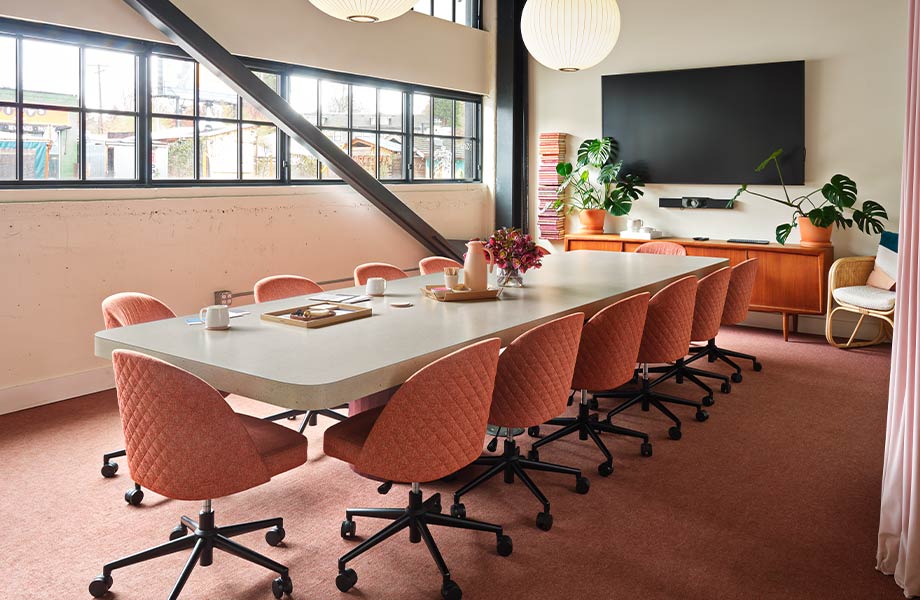
Office environments have evolved well beyond rows of desks and private offices. Today’s workplaces support collaboration, hybrid meetings, focused work, and informal gathering spaces. With more people interacting with shared environments throughout the day, the materials used across the workspace must perform at a higher level.
High-performance interior surfaces help support these demands. From workstations and conference tables to wall panels and reception areas, these materials contribute to spaces that are durable, hygienic, and visually engaging while supporting the functional needs of modern office design.
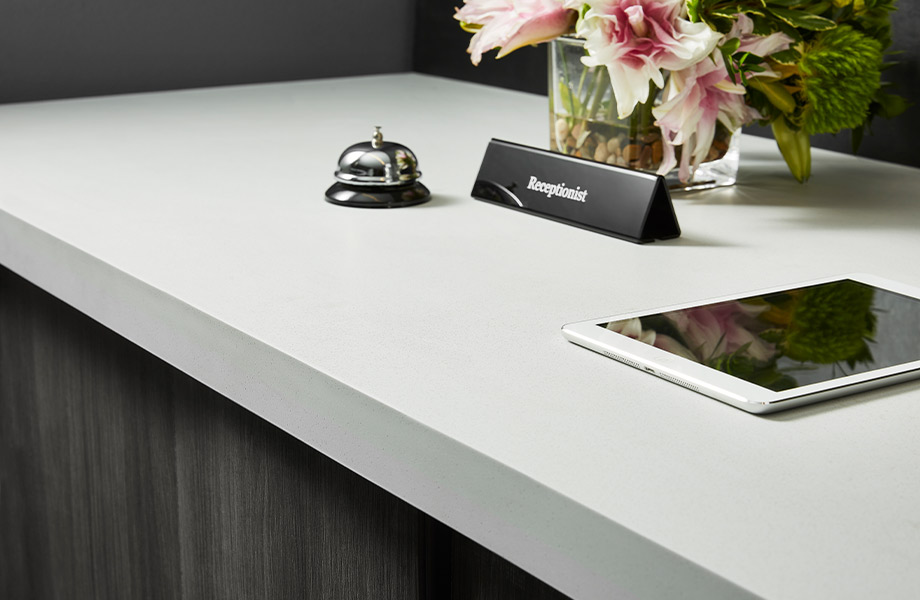
Surfaces Built for High-Traffic Workplaces
Office interiors experience constant daily use. Desktops, breakroom counters, conference tables and partitions all face repeated contact, movement, and cleaning.
High-performance materials are engineered to maintain their appearance under these conditions. Many surfaces are designed to resist scratches, stains, scuffs and impact, helping spaces maintain a professional look over time. Cleanability is equally important, particularly in shared work environments where surfaces are regularly wiped and sanitized.
A variety of material types are commonly used to meet these performance demands:
- High-pressure laminate is frequently used for desktops, conference tables, cabinetry, millwork, and wall panels because of their durability and design flexibility.
- Solid surfacing is often selected for reception desks, transaction counters, breakroom countertops, as well as bathroom vanities and sinks where seamless installation and durability are beneficial.
- Luxury laminate and specialty surfaces add elevated texture, depth and tactile qualities to focal areas such as executive offices, meeting rooms, and reception spaces.
- Structural panels – are two-sided laminate panels that provide creative possibilities for fixtures and furniture in commercial, institutional & hospitality settings.
- Fire-resistant decorative panels can be incorporated into wall protection systems, elevator surrounds, kitchens and other areas where additional safety requirements apply.
Together, these materials help designers create environments that can withstand heavy use while still raising the design bar, creating an engaging workplace for workforces everywhere.
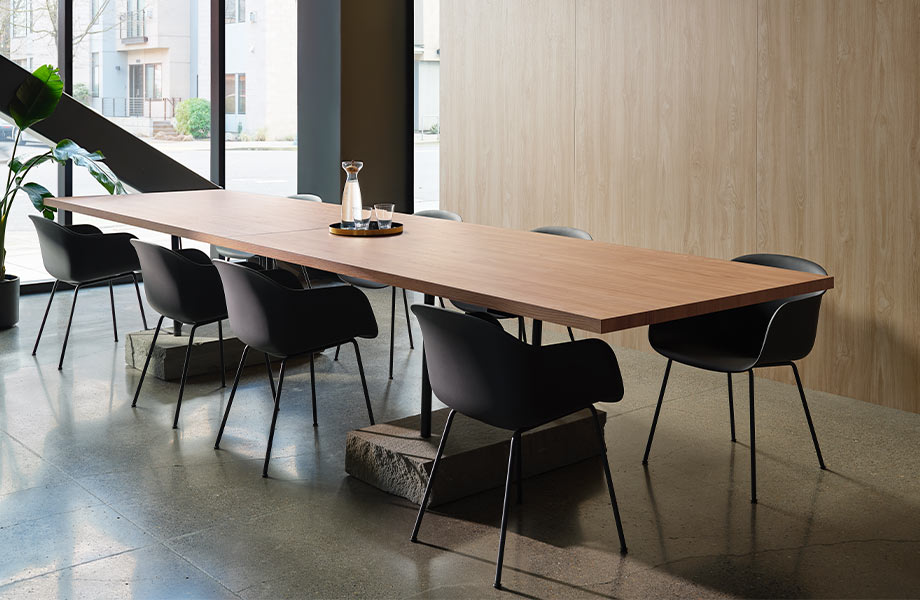
Texture, Depth and Material Expression
While durability is essential, aesthetics and tactile qualities play an equally important role in workplace design. Advances in surfacing technology have expanded the range of visual and physical effects available to designers.
Realistic woodgrain laminates bring warmth to open workspaces and executive offices. Stone-inspired patterns can create striking conference tables or reception counters, especially when paired with large-scale visuals that add drama to a space.
Deep textures and embossed finish laminates enhance authenticity, giving surfaces a tactile quality that mirrors natural materials. Soft-touch matte surfaces are also increasingly popular in modern offices because they diffuse light, reduce fingerprints and create a refined, contemporary appearance.
Metal laminates introduce another design dimension. Brushed, embossed, or patterned metal surfaces can add subtle reflectivity and architectural detail to feature walls, cabinetry, elevator surrounds, or reception areas.
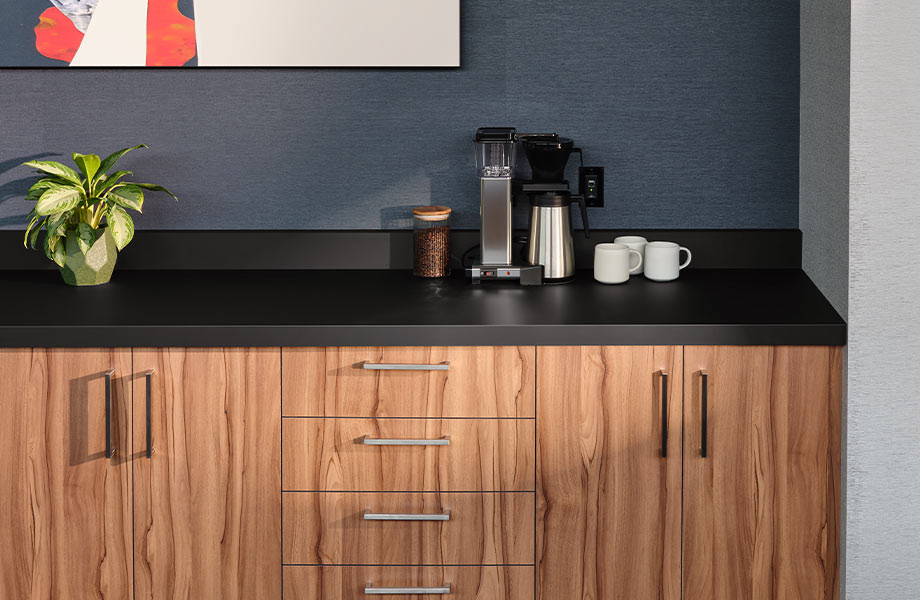
Applications Throughout the Workplace
High-performance interior surfaces can be integrated across nearly every part of the office environment. Materials are often combined to meet the specific functional and performance needs of each space.
Common applications include:
- Workstations and desk systems where laminates and durable surfaces help withstand daily use
- Conference and collaboration tables that require both durability and strong visual presence as well as the cleanability critical for high traffic areas
- Reception desks and transaction counters where solid surface can create seamless designs
- Breakroom and food service counters that must support frequent cleaning and food service activities
- Architectural wall panels and feature walls where laminates, metal surfaces or fire-resistant panels can create design impact
- Cabinetry, storage and millwork where durable decorative surfaces provide consistency throughout the space
Because these materials can be used across both horizontal and vertical surfaces, they allow designers to maintain visual continuity while tailoring performance characteristics to each application.
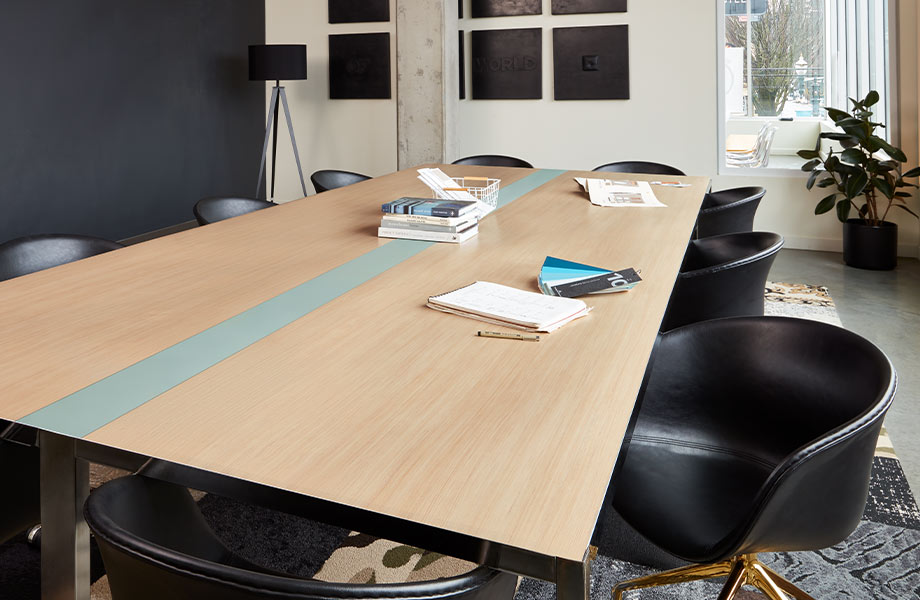
Performance and Design Working Together
By combining durability, design flexibility and a broad range of material options, high-performance surfaces allow offices to balance aesthetics with everyday performance. The result is a workspace that looks refined, functions efficiently and continues to perform well as workplace needs evolve.
Find What You Need in the Formica® Portfolio of Surfacing Solutions
Formica Corporation offers a solution for every category listed above
- Formica® Laminates – the original decorative laminate. We invented the category more than 100 years ago!
- 180fx® by Formica Group
- InDepth Surfacing™
- FENIX® Innovative Materials
- Homapal® Metal Laminates
- Everform® Solid Surfacing
- HardStop® Decorative Panels
Category
Related Articles


